
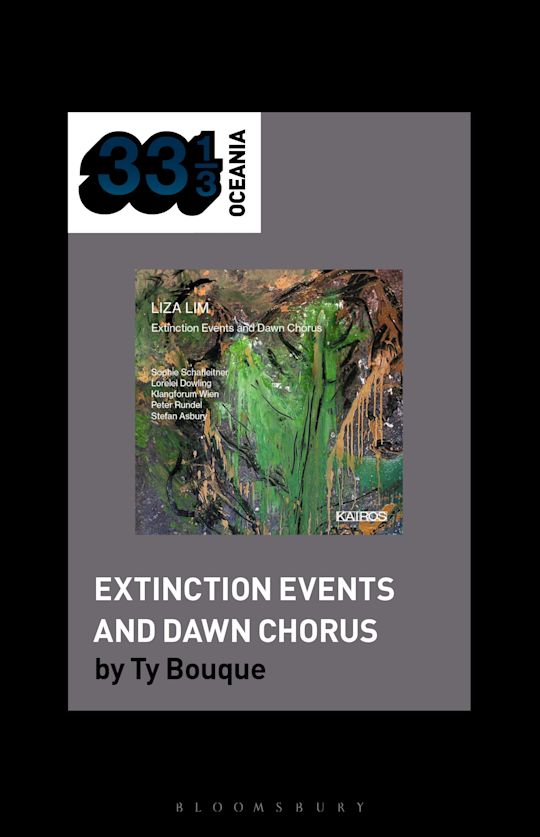
Two new books by writer, baritone and contemporary music specialist Ty Bouque have been published by Bloomsbury Press and Wolke Verlag.
This is writing that critiques ‘aboutness’ and description in musicology and instead, joins musical thinking with various branches of critical theory and philosophy. I find this appealing in that questions of representational logic (how does one thing ‘explain’ another) are what I’ve been trying to work through for a long time in my music. It’s a habit in academia to look for overarching concepts to organise and explain thought and phenomena (the desire for ‘methodology’). My process of working really depends on emergent factors: the people involved, their lived experiences and energetic dispositions creating things (stories, questions, propositions) that they ‘bring into the room’; the cultural contexts of instruments and performance practices; and various unknowns or serendipitous encounters whose significance may only be partially understood… and often only long afterwards. I experience composition as highly emergent, as metabolic in terms of processes of orientation and attunement, rather than as something that can be predetermined. The practice of thinking of musical structure as the work of pre-compositional processes of organisation is pretty much alien to me, hence an attunement to the ideas of various French poststructuralists that Ty brings up in his book. Elizabeth Adams St. Pierre’s work on post-qualitative thinking is interesting here. She writes: ‘Deleuze and Guattari’s (1991/1994) philosophical concepts, such as the rhizome, are deliberately anti-method, and Deleuze (1962/1983) argued that “thought does not need a method” (p. 110), that method will, in fact, shut down thought, capture it, and consign it to the strata, to the normal, to what everyone knows, to the dogmatic image of thought (Deleuze, 1968/1994) that prohibits experimentation and creation’.[1]
It’s not that methods are un-useful but to be more ‘meta’ about it, it’s good to understand that methods themselves are not neutral but very much ‘engines’ of enquiry, thought and making. Whether or not that is problematic for anyone in the act of making music is up to them. But what appears to be anti-method or doing things that escape pre-existing methodologies takes me to a place where everything is incredibly situated and contingent and implicated in its presence, especially the so-called author. In working with more-than-human worlds of collaboration, ultimately, one has to let go of what St. Pierre calls a ‘representationalist logic that relies on a two-world ontology.’ (St. Pierre p. 6)
Ty says: ‘What began as a left-field contribution to their [Bloomsbury’s] 33⅓ series—a book for an album—became a Trojan Horse, a theory of what it means to read New Music shuttled in under the sign of song and dreams’. (email newsletter) There are wide-ranging speculations on ecological thought and it even includes a weirdo conversation at the end between myself, Seth Brodsky and one of my heroes, Stephen Connor.
Ty’s work I think is opening up a transitional space in musicological writing… a good reason to get the book and see if it speaks to you.
Bouque, T. (2026) Liza Lim’s Extinction Events and Dawn Chorus. Sydney, Bloomsbury.
The second book started life as essays for VAN Magazine and chews at length on a couple of chords in my Annunciation Triptych.
Quoting from Wolke Verlag’s website:
What happens when music criticism stops explaining—and instead becomes a form of thought in its own right?
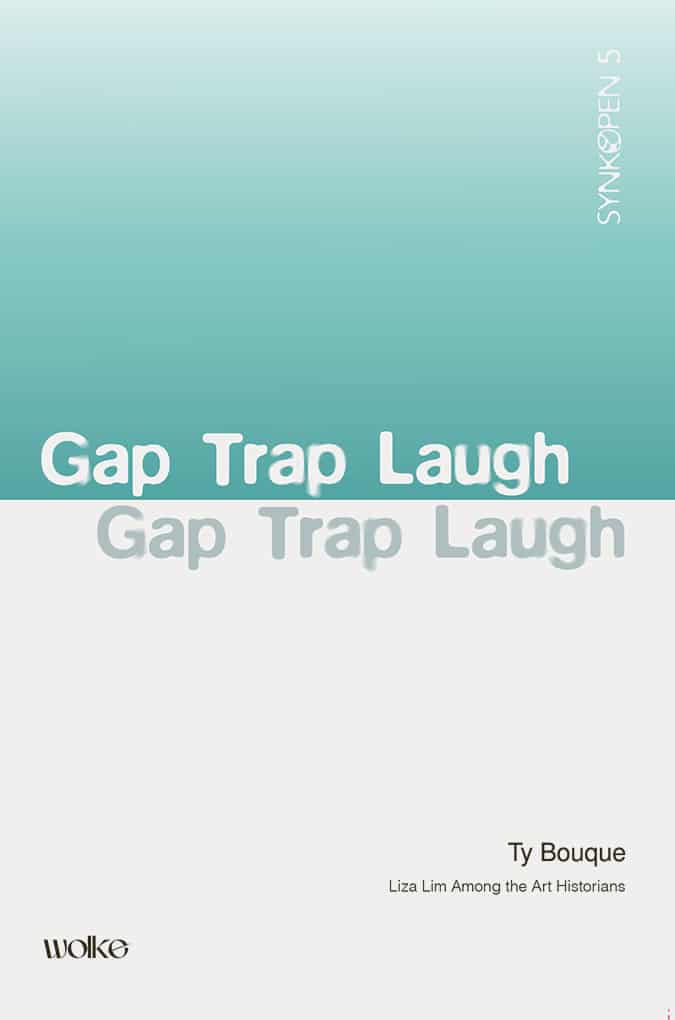
In Gap Trap Laugh, Ty Bouque presents an extraordinary theoretical essay on the work of Australian composer Liza Lim. The starting point is two orchestral chords from her Annunciation Triptych, which defy any unambiguous interpretation and trigger a line of thought that is as radical as it is fascinating. Rather than placing the work in a historical context or deciphering it analytically, Bouque develops a “dizzy theory”—a dizzying form of thought in which contemporary music, Renaissance painting, feminist philosophy, and poststructuralist theory converge.
In dialogue with Hélène Cixous, Julia Kristeva, Luce Irigaray, and Jacques Derrida, Bouque devises a new language for reflecting on music. The three terms “Gap,” “Trap,” and “Laugh” form the framework of an essay that explores the boundaries of representation, the body, sound, and language. Here, music criticism appears not as a detached analysis but as an aesthetic practice that opens itself to the indeterminate, the enigmatic, and the resistant.
Bouque, T. (2026) Gap, Trap, Laugh. Liza Lim Among the Art Historians. Berlin, Wolke Verlag.
*
[1] St. Pierre, E. A. (2019). ‘Post qualitative inquiry, the refusal of method, and the risk of the new’. Qualitative Inquiry. https://journals.sagepub.com/doi/10.1177/1077800419863005

